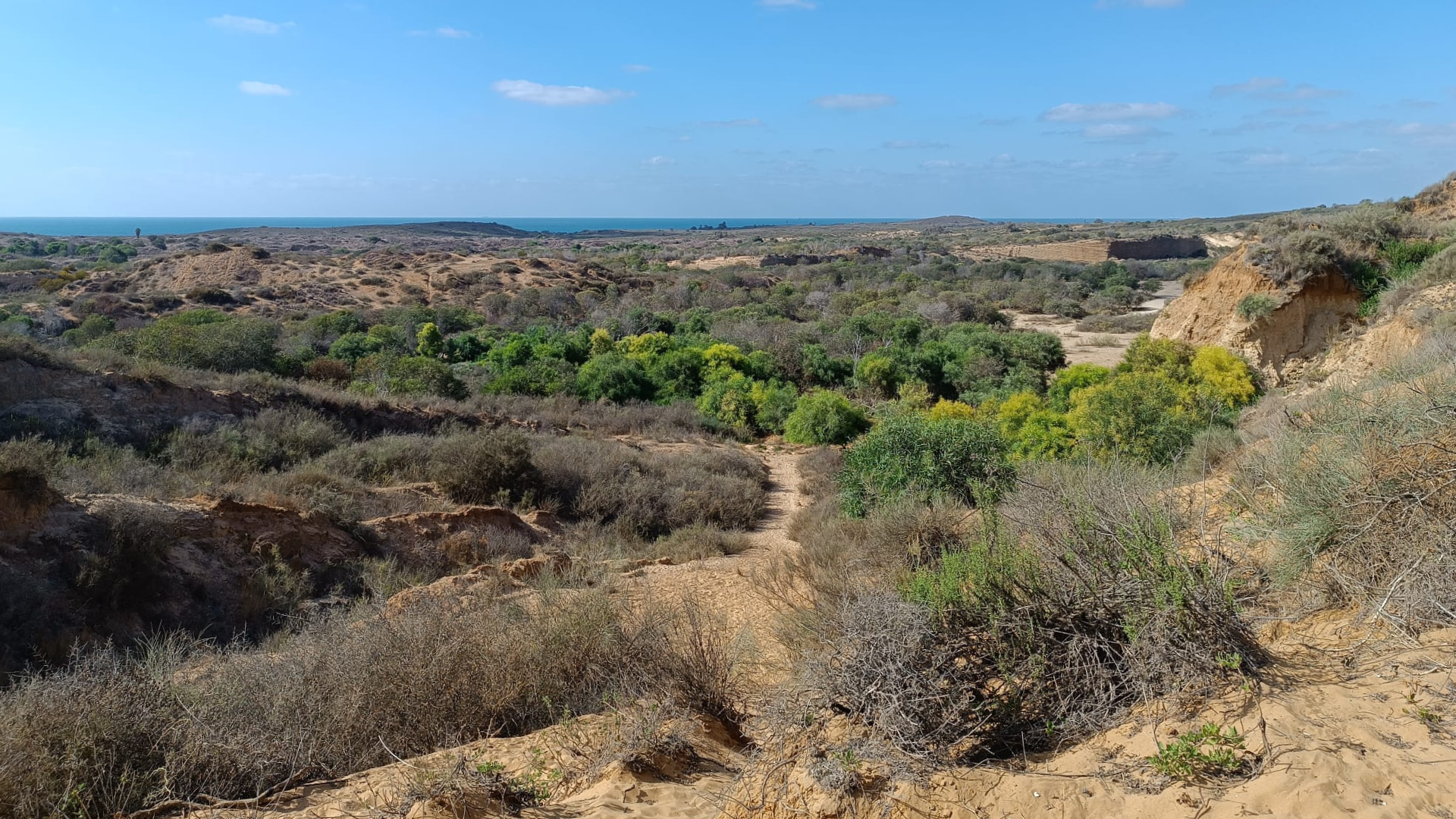
In a precedent-setting planning decision, the Tel Aviv District Planning Committee has accepted the opposition of Adam Teva V’Din to a proposed 24-story tower on the Bat Yam–Jaffa coastline. The developer must return to the Committee with a specific plan for transferring the building rights away from the coast to another location within the city.
The plan, which had been approved for deposit in 2022, sought to build a hotel and luxury residential tower at the Bor HaSid (“Lime Kiln”) site, directly on the coastal cliff. Adam Teva V’Din filed an objection in September, warning that the tower would block public access to the sea, obstruct views, and sever the connection between the city and the coastline at one of the most sensitive and central beach access points in the metropolitan area.
The District Committee’s decision is considered groundbreaking because it makes explicit use of a planning tool that allows for the transfer of building rights for public and environmental reasons, rather than allowing development to proceed in a location that would irreversibly harm the coastal environment and public space.
As a result of the decision, the developer must now present alternatives for relocating the building rights elsewhere in Bat Yam – enabling the coastal site to be preserved and developed instead as a public coastal park, open and accessible to all.
- Proposed building: 24-story tower
- Intended use: Hotel & luxury residences
- Location: The Bor HaSid (Lime Kiln) cliff-top site on the Bat Yam-Jaffa Border
- Planning body: Tel Aviv District Planning Committee
- Status: Building rights may be transferred inland
- Outcome: Coastal site preserved for public use
Attorney Ortal Sanker of Adam Teva V’Din’s legal department welcomed the ruling, emphasizing its broader significance:
“This is a precedent-setting adoption of the transfer of building rights, which allows for the protection of the beach and the public interest , without harming the rights of the developer. We call on the local planning committee not to miss this opportunity and to work together to identify an appropriate alternative site.”
The case highlights a growing recognition within Israel’s planning system that coastal land is a scarce public resource, and that development must be evaluated not only by private economic interests, but by its long-term impact on public access, environmental protection, and urban resilience.
Amit Bracha, Executive Director of Adam Teva V’Din emphasizes that the coast is a continuous public system, not a series of development opportunities.
“Once you break the continuity of access, views, or the coastal walk, you harm the entire shoreline. The beaches belong to the public, and planning must protect them as a whole.”